Quarmup Blog Hub

Group Management and Operations

Group management and operations covers the systems, defaults, and governance rules that keep recurring communities reliable at scale.

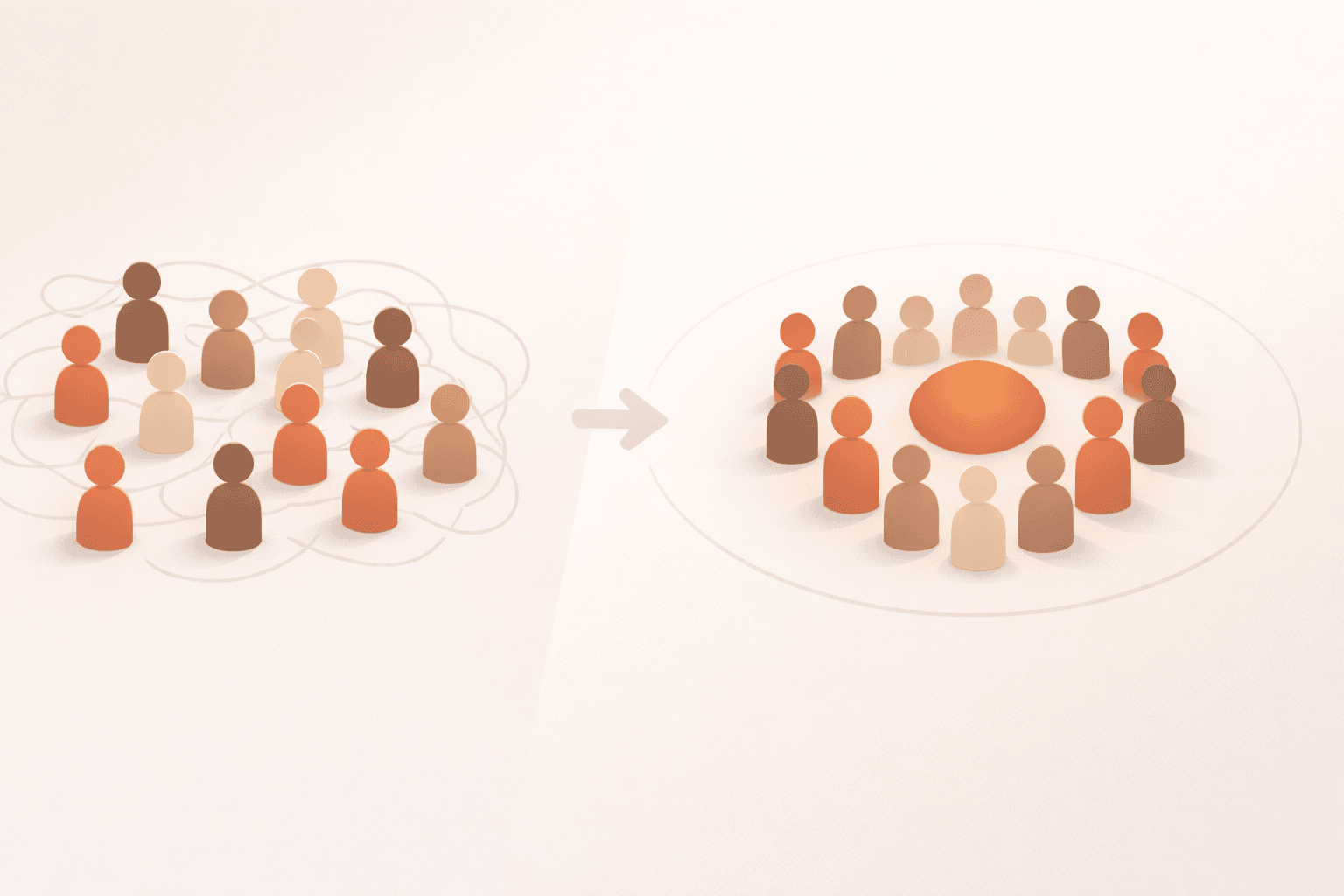
Running one group can be manageable with good habits. Running several groups quickly becomes an operations challenge. Different member rosters, different cadence, and different activity thresholds can create constant context switching for organizers. Without clear system boundaries, details leak between groups and attendance quality drops because members receive inconsistent expectations.

Operations maturity starts with separation and defaults. Each group should have its own threshold logic, invite cadence, and communication rhythm. Reusable templates reduce decision fatigue, while a single RSVP source of truth avoids duplicate follow-ups across channels. When these foundations are stable, hosts spend less time coordinating and more time improving the actual member experience.

This hub emphasizes practical operating models: how to keep multiple communities organized, how to re-engage inactive members, how to avoid reminder fatigue, and how to maintain clarity without sounding robotic. These are the systems that make recurring coordination sustainable for months, not just one event cycle.

It also addresses organizer resilience. Burnout often comes from hidden admin work: manually reconciling responses, rewriting invites, and repeatedly answering the same status questions. Good operations remove that hidden work through repeatable structure and transparent event-state communication. That keeps hosts consistent, and consistency is what members interpret as reliability.

Use this reading order if your group count is growing or if one organizer is carrying too much load. The goal is to build a lightweight operating layer that scales with your community.


Recommended reading order

Follow this sequence for a fast path from fundamentals to implementation.

  1. Managing Multiple Recurring Groups and Events Without Losing Your Mind
  2. Simple Group Management for Small Groups: Why Less Than 20 Is the Sweet Spot
  3. Social Group Management App: What to Look For (and How to Keep Groups Active)
  4. How to Re-Engage Inactive Group Members Without Guilt Messaging
  5. Hosting Tips for Recurring Small Group Events: 9 Habits That Improve Show-Up Rate

Ready to run your next event with less chaos?

Start with a free account or test the full RSVP flow in the interactive demo.

Guides in this hub

Frequently asked questions

What breaks first when groups scale from one community to several?

Threshold logic, invite consistency, and member clarity usually break first when workflows are not separated by group.

How do I reduce organizer burnout in recurring group operations?

Use templates, predictable cadence, targeted reminders, and one RSVP system so hosts avoid repetitive manual coordination.

Should each group have its own quorum threshold defaults?

Yes. Shared defaults across very different activities usually produce weak attendance decisions and inconsistent quality.

How often should I run member re-engagement?

A short re-engagement pass every few cycles is usually enough to recover drifting members without over-messaging everyone.

What operational metric is most useful for recurring hosts?

Time-to-confirm is highly practical because it combines response quality, threshold fit, and reminder effectiveness.

Can small groups benefit from operational structure without becoming formal?

Yes. Lightweight structure improves reliability while preserving the social feel of casual recurring groups.

Ready to test this framework in your own group?

Use the demo to validate your workflow, then move to a free account when you are ready.