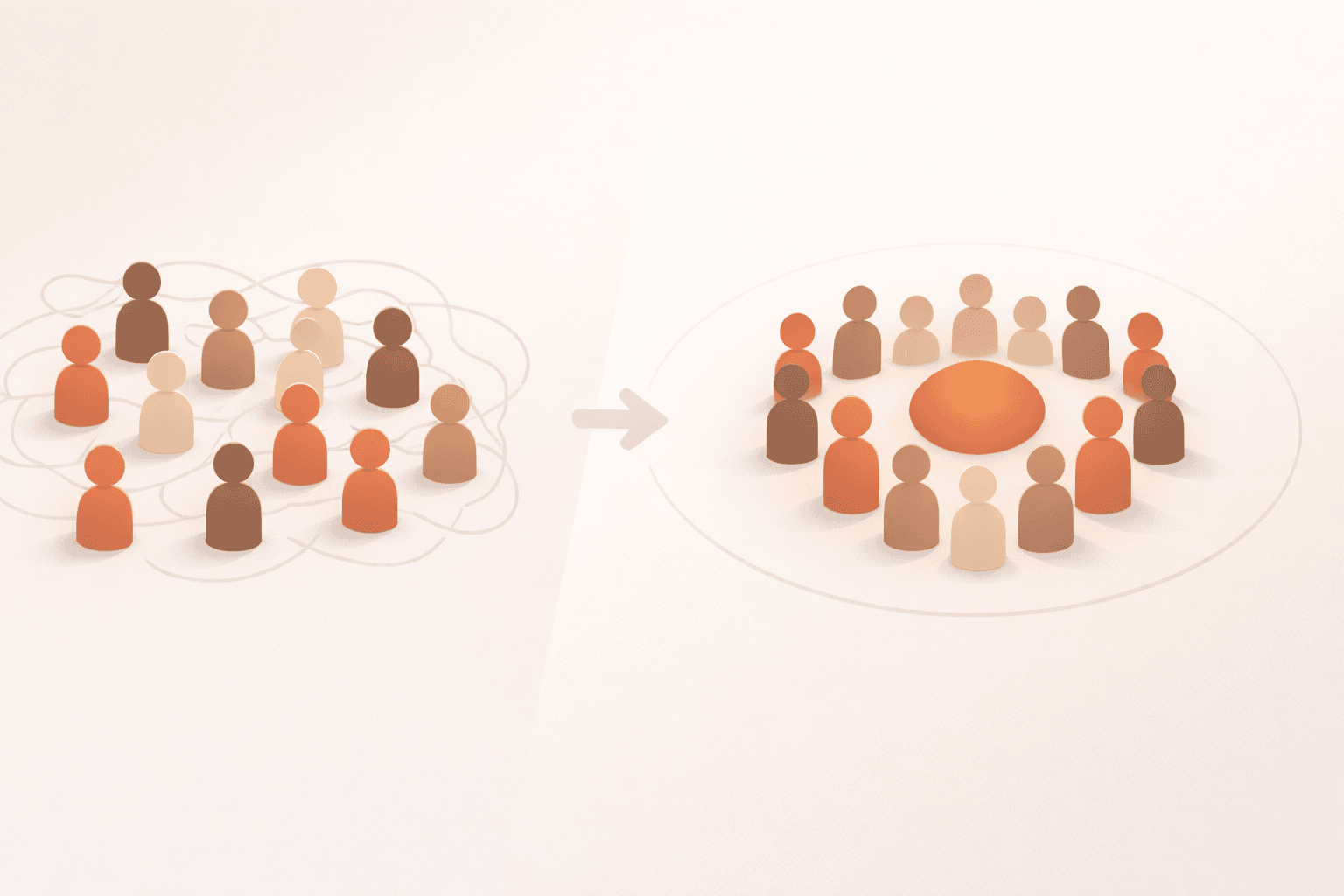
How to Organize Recurring Group Activities Without the Chaos
Recurring group activities break down when attendance is unclear. This practical guide shows how a quorum-based RSVP model keeps events predictable without constant organizer follow-up.
Quarmup Blog Library
Indexable topic hubs, practical playbooks, and implementation guides for quorum-first RSVP workflows.
Recurring group activities break down when attendance is unclear. This practical guide shows how a quorum-based RSVP model keeps events predictable without constant organizer follow-up.
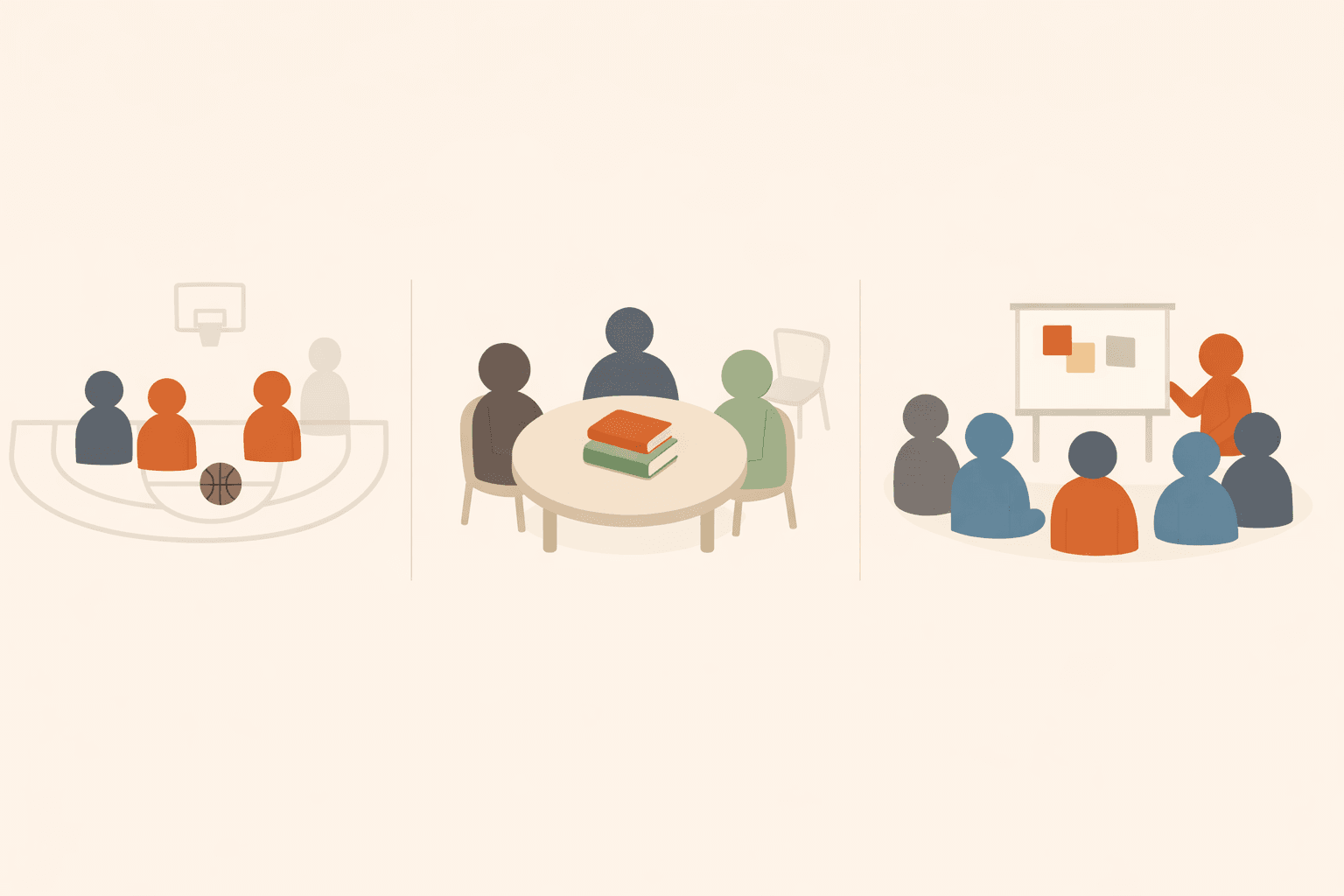
Every group activity has a magic number — the minimum headcount where the event is actually worth doing. Here are the real minimums for pickup basketball, soccer, book clubs, game nights, and more, plus how to stop guessing and automate the whole thing.

Not sure how quorum-based event coordination works? Our interactive demo lets you pick a scenario, RSVP like a real member, and watch the headcount flip an event to ON — no login required.
Practical product-selection and workflow guides for RSVP apps, attendance tracking, and low-friction recurring-event coordination.
Small businesses can use Quarmup before Zoom, Microsoft Teams, or Google Meet sessions to confirm attendance, resolve maybes, and avoid running low-value calls with too few people.
Choosing an RSVP app for small group gatherings is easier when you evaluate attendance outcomes, not feature bloat. Use this framework to pick the right tool.
Small groups don’t fail because people don’t care. They fail because coordination is vague. Here are 8 must-have features that make attendance predictable, reduce organizer burnout, and confirm when an event is actually on.
Busy people ignore another chat ping. Email-based RSVPs keep your pickup games, study sessions, and book clubs moving without forcing everyone into the same platform.
Core concepts and repeatable operating rules for quorum thresholds, invite timing, reminder strategy, and go/no-go event confirmation.
Recurring group activities break down when attendance is unclear. This practical guide shows how a quorum-based RSVP model keeps events predictable without constant organizer follow-up.
Every group activity has a magic number — the minimum headcount where the event is actually worth doing. Here are the real minimums for pickup basketball, soccer, book clubs, game nights, and more, plus how to stop guessing and automate the whole thing.
If your group says yes but still has weak turnout, this attendance guide gives you the full system: invite timing, reminder strategy, maybe-RSVP handling, no-show reduction, and member re-engagement.
Invite timing drives turnout. Send too early and people forget. Send too late and people are booked. Use this timing framework to improve RSVP quality and attendance consistency.
Activity-specific coordination playbooks for pickup basketball, book clubs, game nights, and other recurring in-person groups.
Pickup basketball falls apart when attendance is uncertain. Learn a practical quorum-first RSVP workflow that confirms games earlier and reduces last-minute dropouts.
Book clubs lose momentum when attendance is uncertain. Use a quorum-first RSVP approach to confirm meetings earlier and keep discussion quality high.
Recurring game nights and meetups collapse when attendance is vague. Learn a quorum-first RSVP system that confirms plans early and keeps hosts from over-messaging.
Every group activity has a magic number — the minimum headcount where the event is actually worth doing. Here are the real minimums for pickup basketball, soccer, book clubs, game nights, and more, plus how to stop guessing and automate the whole thing.
Operational guidance for running multiple recurring groups with cleaner processes, lower organizer load, and stronger member clarity.
Small businesses can use Quarmup before Zoom, Microsoft Teams, or Google Meet sessions to confirm attendance, resolve maybes, and avoid running low-value calls with too few people.
Running a basketball league, book club, and running group at the same time? Here's how to coordinate multiple recurring events without drowning in spreadsheets and group chats.
Big enterprise tools are overkill for your 12-person running crew. Here's why the best group management approach for small groups is radically simple — and why groups under 20 people have different needs entirely.
A social group management app should do more than send reminders. Here’s a practical framework for organizing recurring groups, reducing no-shows, and making events reliably happen.
Buyer-side evaluation, rollout planning, and demo-first adoption guidance for teams moving to a quorum-based RSVP workflow.
Not sure how quorum-based event coordination works? Our interactive demo lets you pick a scenario, RSVP like a real member, and watch the headcount flip an event to ON — no login required.
Doodle is useful for one-off availability polls, but recurring groups need quorum-first coordination. Compare both approaches with a practical table and migration guidance.
Shared calendars help with date visibility, but they do not solve recurring attendance thresholds. Compare calendar-first and quorum-first coordination with a practical framework.
Small groups don’t fail because people don’t care. They fail because coordination is vague. Here are 8 must-have features that make attendance predictable, reduce organizer burnout, and confirm when an event is actually on.
Filter by topic or search keywords to quickly find the guides you need.
Small businesses can use Quarmup before Zoom, Microsoft Teams, or Google Meet sessions to confirm attendance, resolve maybes, and avoid running low-value calls with too few people.
If your group says yes but still has weak turnout, this attendance guide gives you the full system: invite timing, reminder strategy, maybe-RSVP handling, no-show reduction, and member re-engagement.
Choosing an RSVP app for small group gatherings is easier when you evaluate attendance outcomes, not feature bloat. Use this framework to pick the right tool.
No-shows usually come from uncertainty, not bad intent. This playbook shows how to reduce no-shows with clearer logistics, threshold signaling, reminder timing, and simple accountability loops.
Invite timing drives turnout. Send too early and people forget. Send too late and people are booked. Use this timing framework to improve RSVP quality and attendance consistency.
Good reminders improve turnout. Bad reminders feel like spam. Use this RSVP reminder strategy to increase response rates while keeping member trust high.
These hosting tips for recurring small group events help you improve RSVP quality, reduce no-shows, and keep your event cadence sustainable.
Maybe RSVPs are the biggest source of attendance uncertainty. This guide shows how to convert maybes into clear yes/no decisions without pressuring members.
When members stop responding, most groups either ignore it or over-message. Use this re-engagement playbook to recover attendance with respectful outreach and cleaner event structure.
A social group management app should do more than send reminders. Here’s a practical framework for organizing recurring groups, reducing no-shows, and making events reliably happen.
Small groups don’t fail because people don’t care. They fail because coordination is vague. Here are 8 must-have features that make attendance predictable, reduce organizer burnout, and confirm when an event is actually on.
Not sure how quorum-based event coordination works? Our interactive demo lets you pick a scenario, RSVP like a real member, and watch the headcount flip an event to ON — no login required.
Every group activity has a magic number — the minimum headcount where the event is actually worth doing. Here are the real minimums for pickup basketball, soccer, book clubs, game nights, and more, plus how to stop guessing and automate the whole thing.
Busy people ignore another chat ping. Email-based RSVPs keep your pickup games, study sessions, and book clubs moving without forcing everyone into the same platform.
Big enterprise tools are overkill for your 12-person running crew. Here's why the best group management approach for small groups is radically simple — and why groups under 20 people have different needs entirely.
Group chat is great for conversation, but recurring group coordination needs structure. Here is a practical comparison of chat threads versus a quorum-based RSVP flow that actually confirms events.
In-person attendance is a bigger ask than clicking a video link. Here's why small in-person groups face a unique fragility problem — and how a minimum-headcount model fixes it before attendance uncertainty snowballs.
Recurring group activities break down when attendance is unclear. This practical guide shows how a quorum-based RSVP model keeps events predictable without constant organizer follow-up.
Pickup basketball falls apart when attendance is uncertain. Learn a practical quorum-first RSVP workflow that confirms games earlier and reduces last-minute dropouts.
Book clubs lose momentum when attendance is uncertain. Use a quorum-first RSVP approach to confirm meetings earlier and keep discussion quality high.
Recurring game nights and meetups collapse when attendance is vague. Learn a quorum-first RSVP system that confirms plans early and keeps hosts from over-messaging.
Doodle is useful for one-off availability polls, but recurring groups need quorum-first coordination. Compare both approaches with a practical table and migration guidance.
Shared calendars help with date visibility, but they do not solve recurring attendance thresholds. Compare calendar-first and quorum-first coordination with a practical framework.
Running a basketball league, book club, and running group at the same time? Here's how to coordinate multiple recurring events without drowning in spreadsheets and group chats.