How to Organize Recurring Group Activities Without the Chaos
Recurring group activities break down when attendance is unclear. This practical guide shows how a quorum-based RSVP model keeps events predictable without constant organizer follow-up.
Quarmup Blog Hub
Quorum and RSVP fundamentals define how many people you need, how decisions are collected, and when an event is officially confirmed or cancelled.
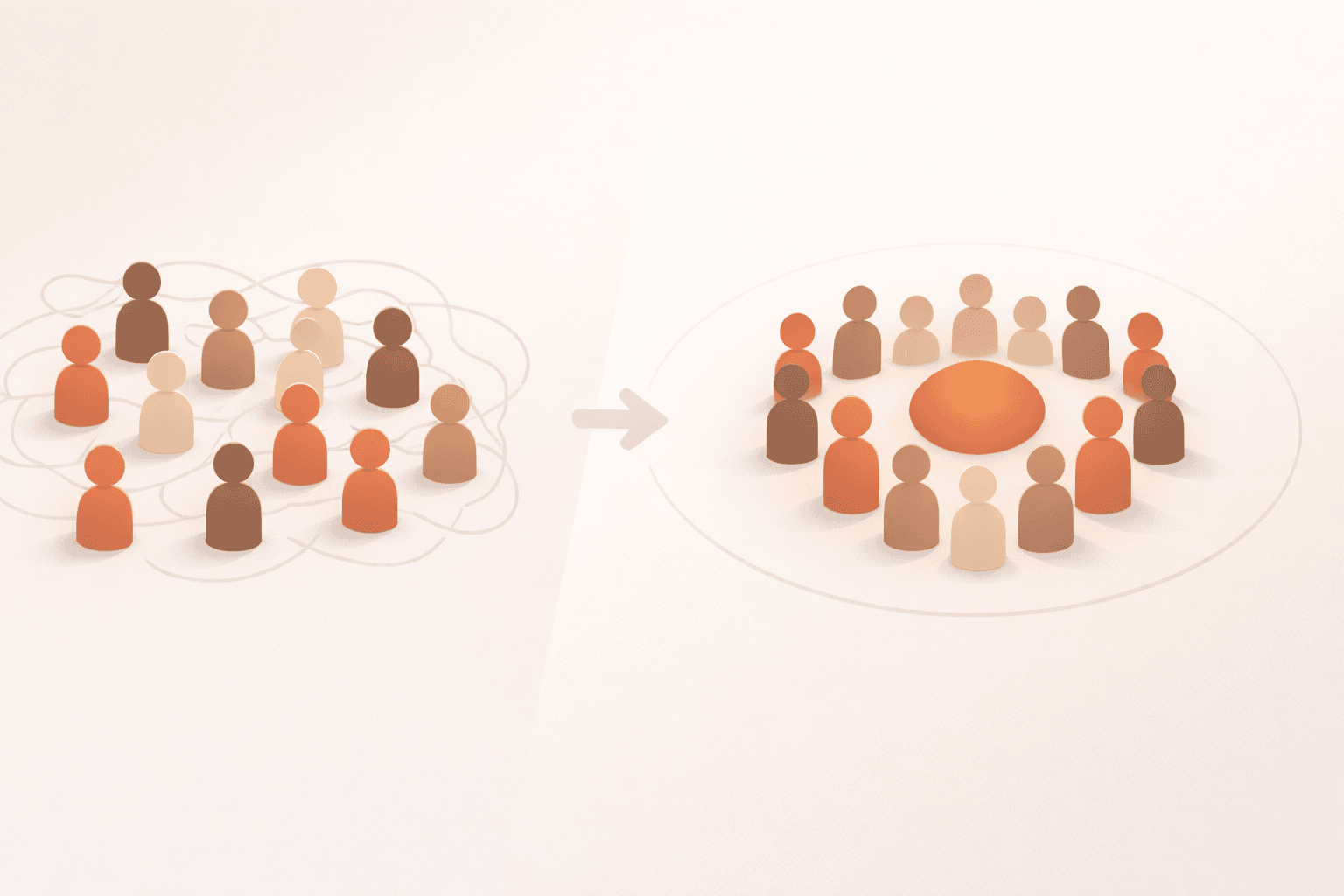
Recurring groups fail when attendance logic is implicit. If no one knows the minimum number needed, every RSVP becomes a guess and members wait for social proof. Quorum-first coordination solves that by publishing the threshold before invites go out. Once yes responses reach the target, the event is confirmed. If not, the event closes early. The decision is visible and objective, not based on last-minute organizer judgment.
RSVP quality is equally important. A clean yes/no/maybe flow lets hosts see actual risk before event day. Maybe responses can be useful early, but they should be resolved before final confirmation so the count reflects real commitment. Without that step, groups overestimate attendance and repeatedly run borderline events, which creates low-energy sessions and eventually lower trust in future invites.
Timing is the second half of the system. Send invites when members can decide, not when the organizer remembers. Weekly groups often perform best with a 5-7 day window; monthly groups usually need a longer lead time. One targeted reminder to unresolved members near the checkpoint is typically enough. The goal is clear decisions, not message volume.
These fundamentals are universal across pickup basketball, book clubs, game nights, and neighborhood meetups. The exact threshold changes by format, but the operating model does not: define minimum, collect RSVPs in one place, resolve uncertainty, and communicate ON/OFF status early enough for planning. Groups that follow this model spend less time coordinating and more time actually meeting.
Use the reading order here to lock down your baseline rules first. Then you can tune specific thresholds by activity type without rewriting your whole workflow each cycle.
Follow this sequence for a fast path from fundamentals to implementation.
Start with a free account or test the full RSVP flow in the interactive demo.
Recurring group activities break down when attendance is unclear. This practical guide shows how a quorum-based RSVP model keeps events predictable without constant organizer follow-up.

Every group activity has a magic number — the minimum headcount where the event is actually worth doing. Here are the real minimums for pickup basketball, soccer, book clubs, game nights, and more, plus how to stop guessing and automate the whole thing.
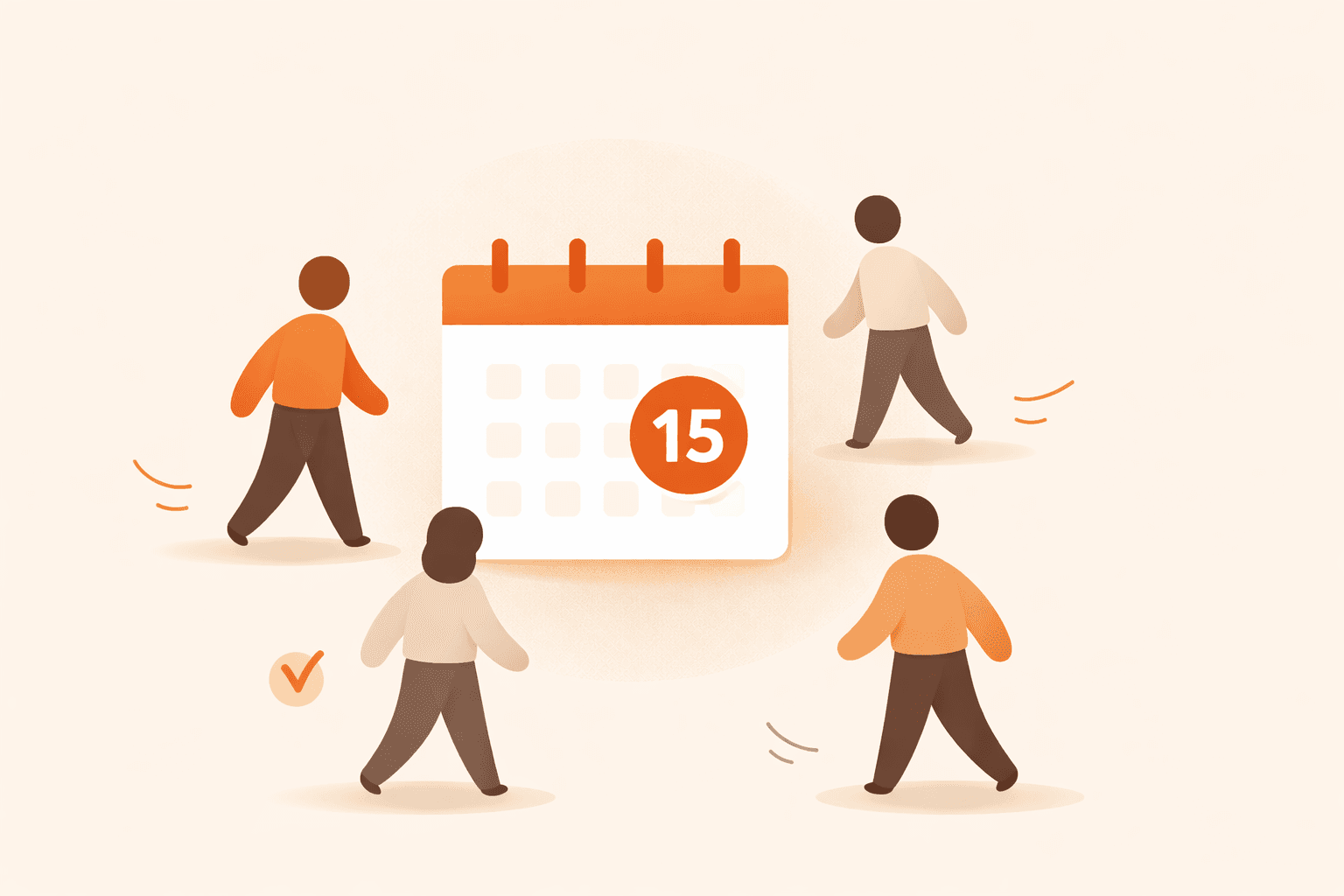
If your group says yes but still has weak turnout, this attendance guide gives you the full system: invite timing, reminder strategy, maybe-RSVP handling, no-show reduction, and member re-engagement.

Invite timing drives turnout. Send too early and people forget. Send too late and people are booked. Use this timing framework to improve RSVP quality and attendance consistency.

Good reminders improve turnout. Bad reminders feel like spam. Use this RSVP reminder strategy to increase response rates while keeping member trust high.

Maybe RSVPs are the biggest source of attendance uncertainty. This guide shows how to convert maybes into clear yes/no decisions without pressuring members.

Group chat is great for conversation, but recurring group coordination needs structure. Here is a practical comparison of chat threads versus a quorum-based RSVP flow that actually confirms events.

Busy people ignore another chat ping. Email-based RSVPs keep your pickup games, study sessions, and book clubs moving without forcing everyone into the same platform.

Small businesses can use Quarmup before Zoom, Microsoft Teams, or Google Meet sessions to confirm attendance, resolve maybes, and avoid running low-value calls with too few people.
These hosting tips for recurring small group events help you improve RSVP quality, reduce no-shows, and keep your event cadence sustainable.

A social group management app should do more than send reminders. Here’s a practical framework for organizing recurring groups, reducing no-shows, and making events reliably happen.

In-person attendance is a bigger ask than clicking a video link. Here's why small in-person groups face a unique fragility problem — and how a minimum-headcount model fixes it before attendance uncertainty snowballs.

No-shows usually come from uncertainty, not bad intent. This playbook shows how to reduce no-shows with clearer logistics, threshold signaling, reminder timing, and simple accountability loops.

Small groups don’t fail because people don’t care. They fail because coordination is vague. Here are 8 must-have features that make attendance predictable, reduce organizer burnout, and confirm when an event is actually on.

Not sure how quorum-based event coordination works? Our interactive demo lets you pick a scenario, RSVP like a real member, and watch the headcount flip an event to ON — no login required.

Big enterprise tools are overkill for your 12-person running crew. Here's why the best group management approach for small groups is radically simple — and why groups under 20 people have different needs entirely.

Book clubs lose momentum when attendance is uncertain. Use a quorum-first RSVP approach to confirm meetings earlier and keep discussion quality high.

Recurring game nights and meetups collapse when attendance is vague. Learn a quorum-first RSVP system that confirms plans early and keeps hosts from over-messaging.
A quorum threshold is the minimum number of confirmed attendees needed to run the event with acceptable quality.
No. Quorum should be based on confirmed yes responses, while maybe responses are treated as unresolved risk.
Confirm as soon as quorum is reached and early enough for members to commit logistics and travel.
Weekly groups often perform best with 5-7 days of lead time, while monthly groups commonly need 10-14 days.
They remove ambiguity, make member contribution visible, and reduce last-minute organizer guesswork.
Yes. The method is stable across activities; only the minimum number changes based on format and quality goals.
Use the demo to validate your workflow, then move to a free account when you are ready.