How to Organize Recurring Group Activities Without the Chaos
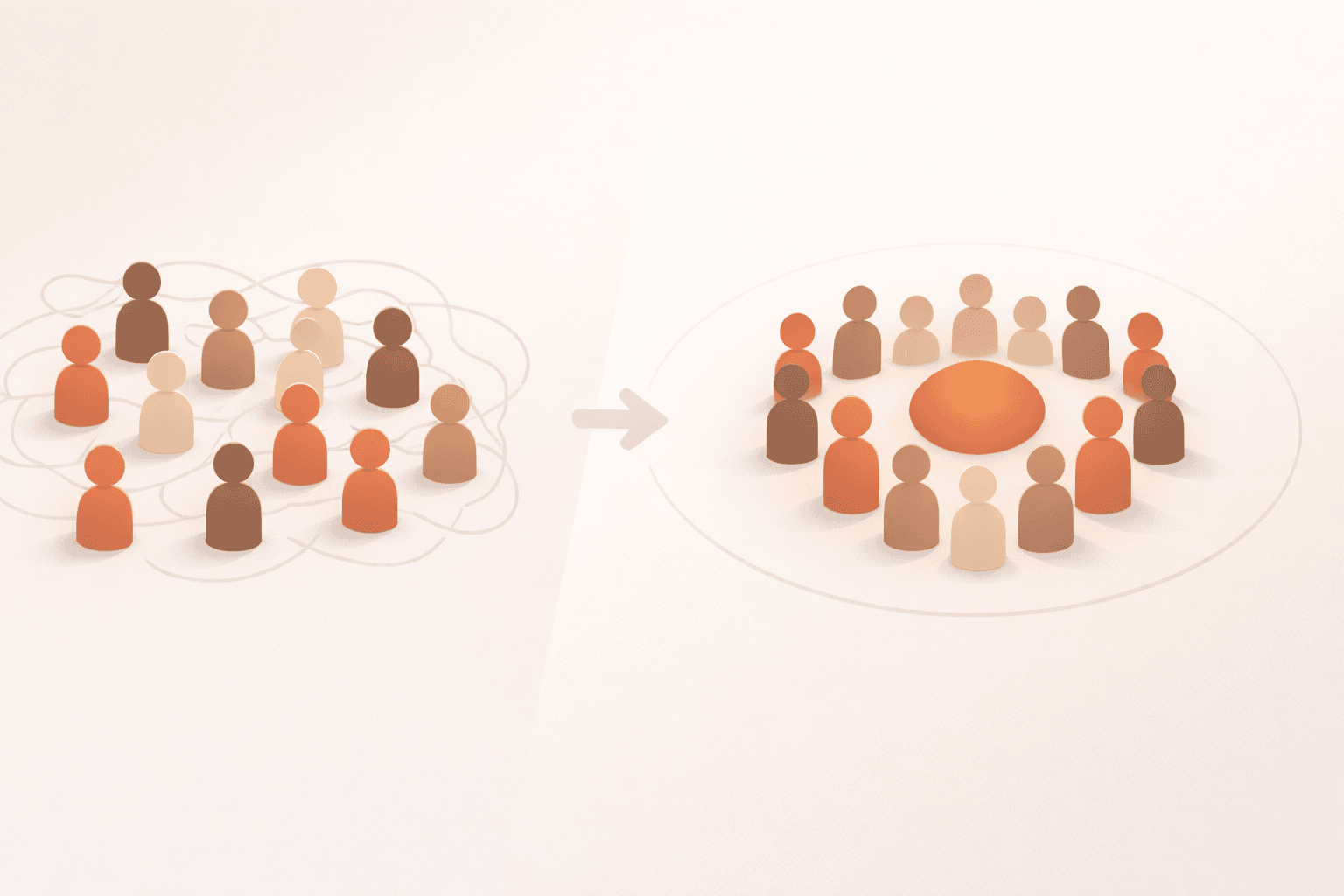
Recurring group activities break down when attendance is unclear. This practical guide shows how a quorum-based RSVP model keeps events predictable without constant organizer follow-up.
Quick take
Recurring group activities break down when attendance is unclear. This practical guide shows how a quorum-based RSVP model keeps events predictable without constant organizer follow-up. The durable path is a clear threshold, low-friction RSVP, and early confirmation rules.
Try this next
Key takeaways
- Members know exactly what "enough people" means.
- Organizers stop manual counting and repeated follow-up.
- The group sees one source of truth for event status.
- Recurring events become predictable instead of fragile.
- Define a realistic quorum threshold for your activity.
Recurring group activities fail for a predictable reason: nobody knows early enough if enough people are actually coming. The event might still happen, but confidence drops and attendance gets worse over time.
Want a cleaner workflow? Try the demo and sign up free.
The Core Coordination Problem
Most groups run recurring events through chat and calendar invites. That creates an informal loop with no hard decision rule. People delay responses, organizers chase updates, and final status is uncertain until the last minute.
The missing piece is a minimum attendee count
Every recurring activity has a floor. Pickup basketball usually needs 8 for smaller-court 4v4 and 10+ for standard full-court 5v5. A book club may need 4 or 5. A game night may need enough players for specific games. Without this threshold, "is it on?" stays subjective.
Ready to apply this in your next cycle?
Use the same flow in one live event and compare your confirmation speed.
How Quorum-Based RSVP Solves the Chaos
Quorum-based RSVP sets that floor explicitly. Members RSVP yes/no/maybe, progress is visible, and the event is confirmed when the threshold is reached. The status is a system output, not a debate.
Practical benefits for recurring group coordination
- Members know exactly what "enough people" means.
- Organizers stop manual counting and repeated follow-up.
- The group sees one source of truth for event status.
- Recurring events become predictable instead of fragile.
A Simple Recurring Setup You Can Use This Week
- Define a realistic quorum threshold for your activity.
- Send one clear RSVP link and one reminder to non-responders.
- Confirm automatically when quorum is reached.
- Review turnout and tune the threshold if needed.
If you still coordinate in chat threads, read Why Group Chat Fails for Event Planning first. If you want higher response rates without app friction, use Email-First RSVPs for Small Groups. For threshold math, use How Many People Do You Actually Need?.
Why This Is a Different Category
Quorum-based RSVP for recurring group coordination is not another poll tool. It is a category focused on one operational outcome: confirming whether recurring events happen without organizer guesswork.
For broader context, see Social Group Management App: What to Look For.
Run your next recurring event with less guesswork: Try the demo and sign up free.