Shared Calendars vs Quorum-First Coordination for Recurring Groups
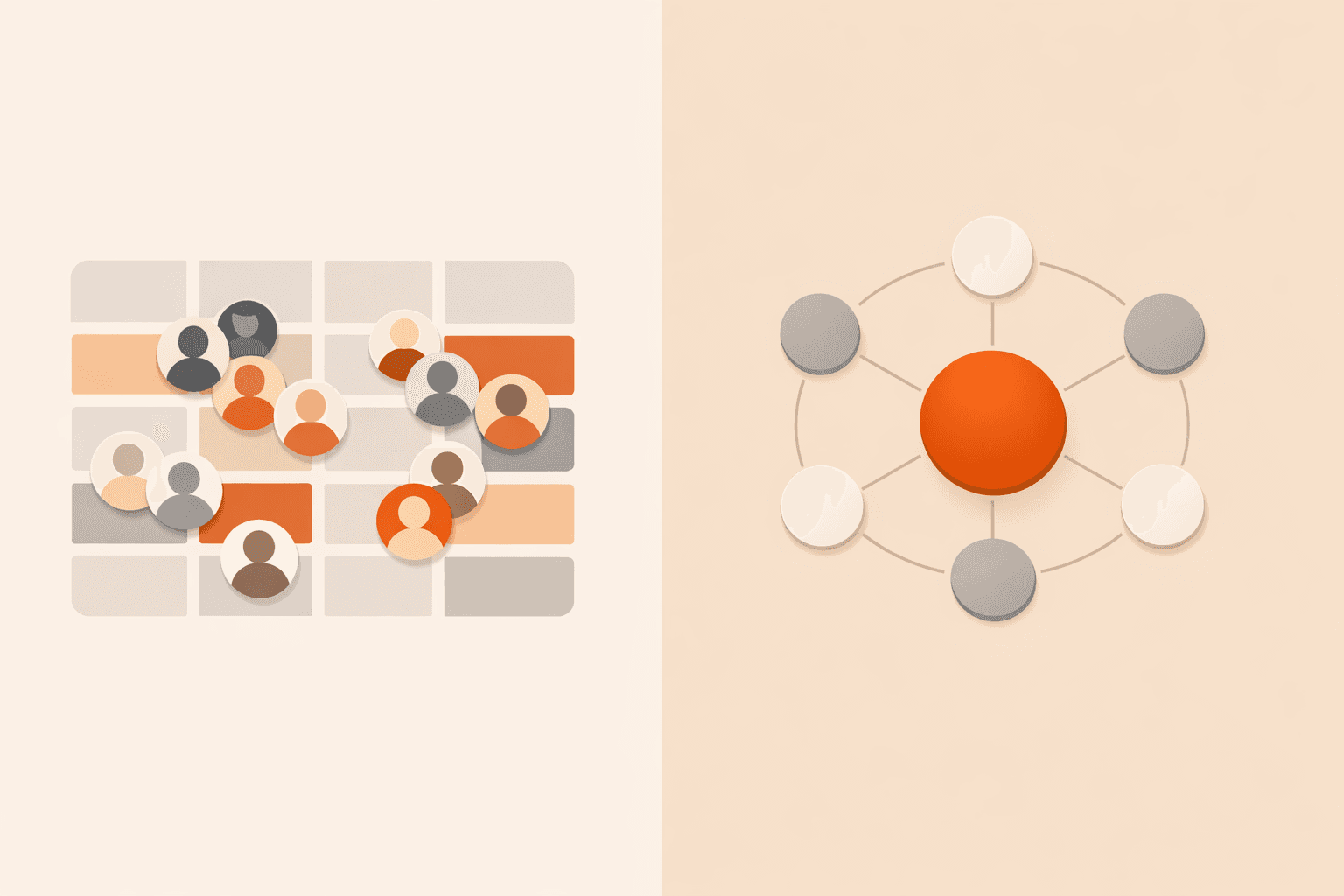
Shared calendars help with date visibility, but they do not solve recurring attendance thresholds. Compare calendar-first and quorum-first coordination with a practical framework.
Quick take
Shared calendars help with date visibility, but they do not solve recurring attendance thresholds. Compare calendar-first and quorum-first coordination with a practical framework. The durable path is a clear threshold, low-friction RSVP, and early confirmation rules.
Try this next
Key takeaways
- Keep your calendar for date visibility.
- Move RSVP state to a quorum-first flow.
- Set quorum threshold for the recurring event.
- Let automatic confirmation handle go/no-go status.
Shared calendars are useful for seeing dates. They are weaker for deciding whether recurring events should happen when attendance is uncertain.
Try a quorum-first workflow: Try the demo or sign up free.
Shared Calendars vs Quorum-First Coordination
Calendar-first systems assume the event exists and attendees should accept or decline. Quorum-first systems assume the event depends on reaching a minimum attendee count.
The model difference matters
If your group activity is attendance-dependent, calendar visibility alone does not answer the operational question: is this recurring event on?
Ready to apply this in your next cycle?
Use the same flow in one live event and compare your confirmation speed.
Comparison Table
| Coordination requirement | Shared calendar workflow | Quorum-first workflow |
|---|---|---|
| Visibility of date/time | Strong | Strong |
| Minimum attendee logic | Usually manual | Built in |
| Recurring confirmation status | Organizer-managed | Automatic at quorum |
| Handling non-responders | Manual follow-up | Structured reminder flow |
| Organizer workload over time | Increases with recurrence | Stays lower through repeatable rules |
A Simple Migration Path
- Keep your calendar for date visibility.
- Move RSVP state to a quorum-first flow.
- Set quorum threshold for the recurring event.
- Let automatic confirmation handle go/no-go status.
For a broader overview, read How to Organize Recurring Group Activities Without the Chaos. For channel pitfalls, read Why Group Chat Fails for Event Planning. For response quality, read Email-First RSVPs for Small Groups. For an adjacent comparison, read Doodle vs Quorum-Based RSVP for Recurring Groups.
If calendars alone are not enough for your group: Try the demo and sign up free.