Quarmup Blog Hub

Evaluation and Adoption

Evaluation and adoption guides help organizers compare options, run pilots, and move from trial to repeatable usage with minimal member friction.

Adopting a new coordination workflow is less about feature comparison and more about behavior change. The strongest evaluations test whether members can RSVP quickly, whether hosts can confirm status earlier, and whether manual follow-up drops after two to four cycles. If those outcomes improve, adoption usually sticks. If they do not, even impressive feature sets struggle in real recurring groups.

A demo-first approach reduces adoption risk. Before asking members to change tools, hosts should run one realistic pilot event with clear success criteria: response rate, maybe-resolution rate, time-to-confirm, and no-show trend. This lets you evaluate workflows under real scheduling pressure instead of relying on static product tours or generic marketing claims.

Implementation planning matters as much as tool selection. Members need one clear RSVP path, not a migration project. Organizers need a default cadence and message pattern they can run without thinking. Adoption improves when the first month has a narrow scope: one group, one reminder policy, one threshold model, and a short retrospective after each cycle.

This hub includes practical comparison frameworks plus product-path content for teams ready to move. You can use it whether you are replacing chat-based coordination, formalizing a spreadsheet process, or rolling out a new attendance tool across multiple activity types. The point is measurable reliability, not added complexity.

Follow the reading order to define your pilot, validate outcomes, and choose a conversion path that feels helpful instead of pushy. That is how recurring groups adopt sustainably.

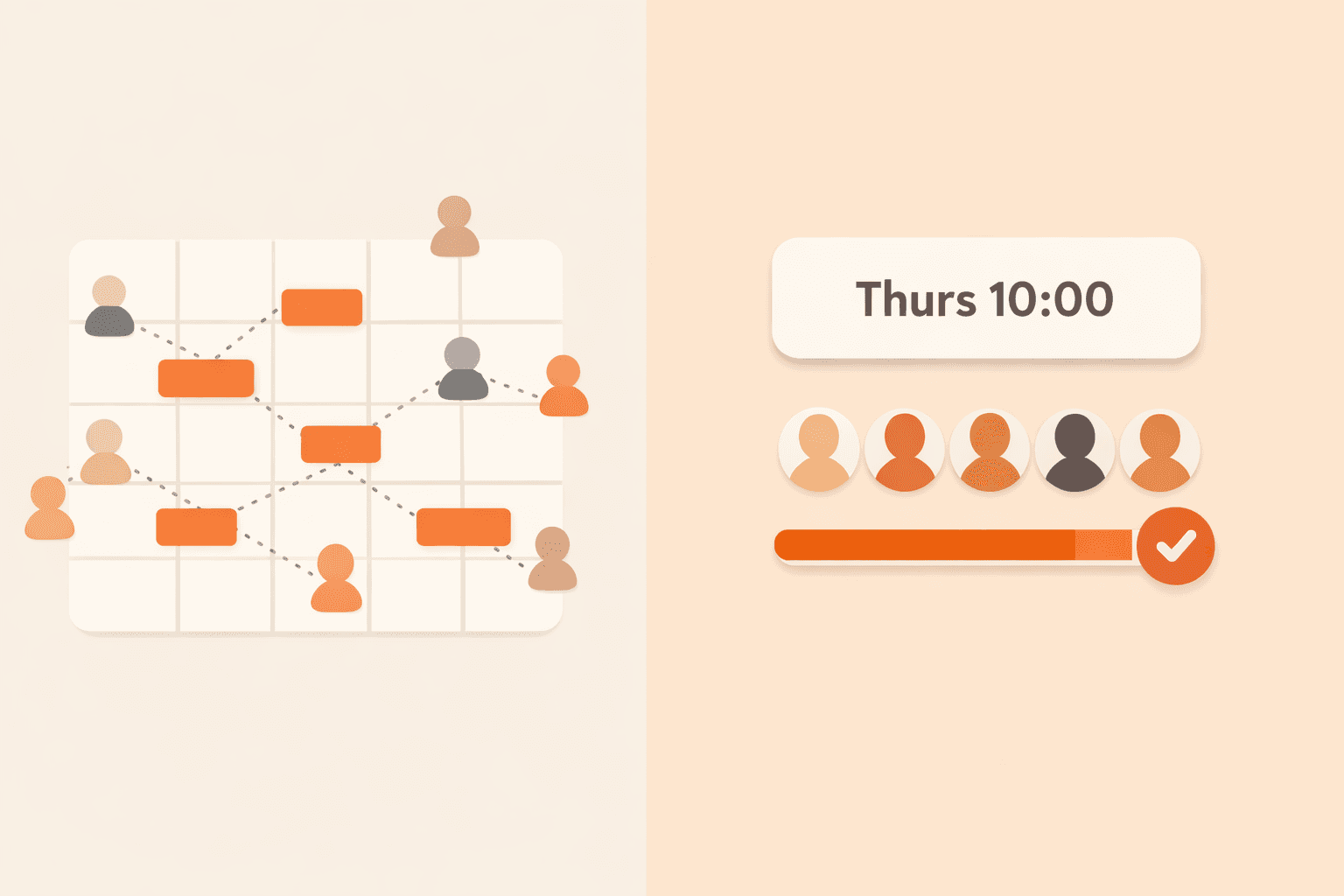
Recommended reading order

Follow this sequence for a fast path from fundamentals to implementation.

  1. Try the Quarmup Demo Before You Sign Up — See Quorum-Based RSVPs in Action
  2. Doodle vs Quorum-Based RSVP for Recurring Groups
  3. Shared Calendars vs Quorum-First Coordination for Recurring Groups
  4. 8 Must-Have Features for Small Group Coordination (Pickup Games, Book Clubs, and Recurring Meetups)
  5. RSVP Tool for Small Group Gatherings: A Practical Setup That Increases Responses

Ready to run your next event with less chaos?

Start with a free account or test the full RSVP flow in the interactive demo.

Guides in this hub

Frequently asked questions

How should I evaluate an RSVP workflow before rollout?

Run a live pilot with real members and track response rate, time-to-confirm, maybe-resolution, and no-show outcomes.

Is a demo enough to decide on long-term adoption?

A demo is a good start, but one real event cycle gives the evidence you need to evaluate reliability under real conditions.

What is the lowest-risk adoption plan for recurring groups?

Start with one group and one event cadence, keep the RSVP path simple, and expand only after metrics improve.

Which metric best indicates early product fit for coordination tools?

Time-to-confirm is a strong early indicator because it reflects participation quality and threshold clarity.

How do I keep adoption from feeling like spam to members?

Use contextual invites and clear value messaging, then let members experience faster confirmations before asking for broader behavior change.

What should happen after a successful pilot event?

Document the winning cadence, threshold, and reminder pattern, then roll that template into the next group cycle.

Ready to test this framework in your own group?

Use the demo to validate your workflow, then move to a free account when you are ready.